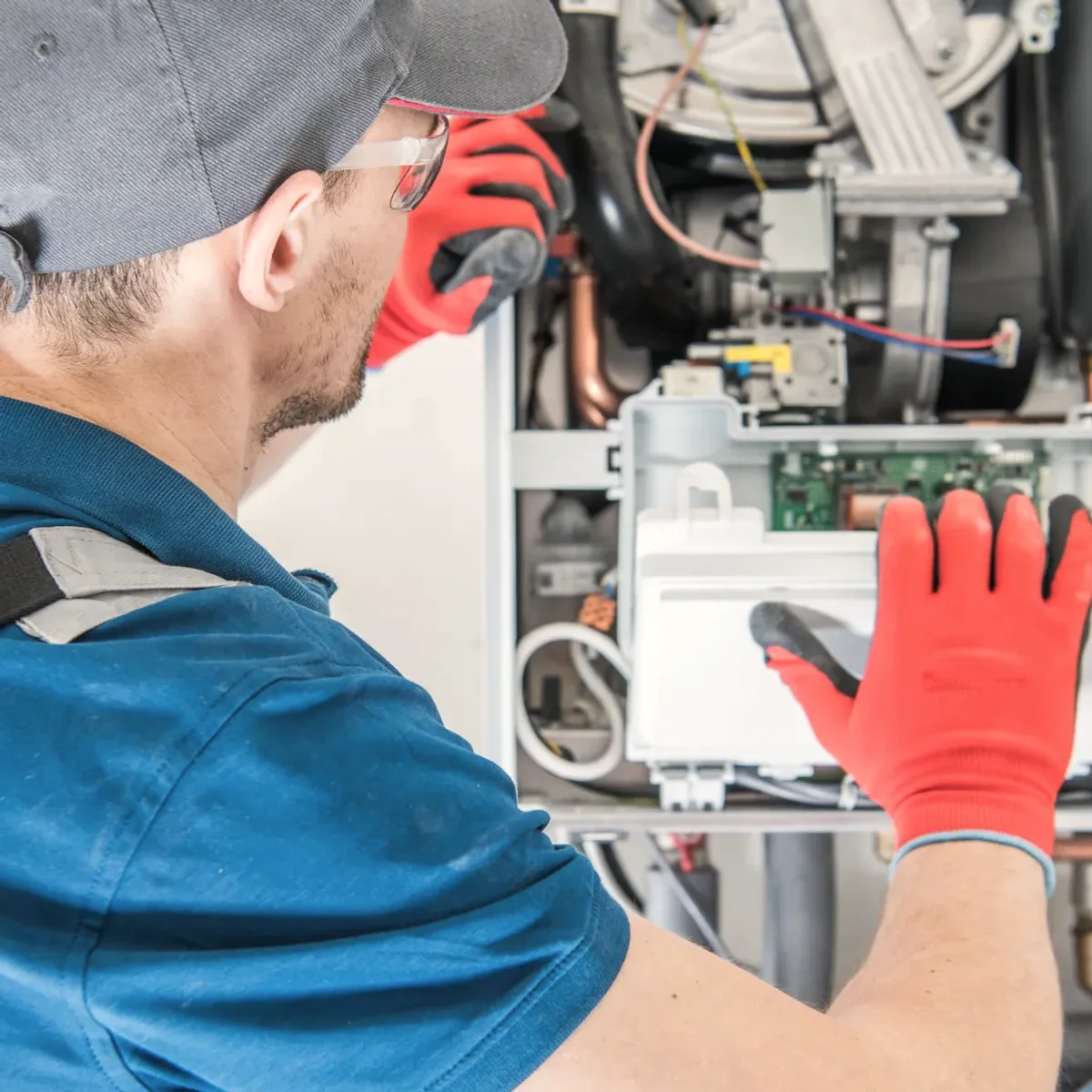
What fuel and boiler type does the property use, and does it serve radiators or in-floor loops?
Boiler work depends on the boiler type, fuel, heat distribution, and the fault or installation need. A natural-draft cast-iron boiler serving radiators differs from a condensing modulating unit connected to in-floor loops, so model and system records matter. No-heat, leakage, or pressure changes can arise from an igniter, circulator, expansion tank, or another component. Diagnosis separates repair from replacement, while maintenance follows inspection findings and manufacturer instructions rather than an automatic flushing schedule.
Assessment can review the boiler model and fuel, operating history, pressure behaviour, visible leakage, burner or ignition operation, circulator, and connected zones. A pressure loss or dripping relief valve needs a different investigation from a cold radiator caused by a circulator or zone issue. Natural-draft and condensing equipment also have different venting and service requirements. These findings shape repair, replacement, or maintenance recommendations.
Gas, propane, and oil boiler faults, including ignition and pressure issues
Cast-iron and condensing boilers serving radiators or in-floor loops
Condition-based maintenance and repair-versus-replacement decisions
Assessment and Scope
Questions for the Proposed Work
01
Distinguish ignition, circulation, and pressure faults
A boiler that fails to heat can have an ignition problem, while cold radiators or in-floor zones may point to circulation, zoning, or air movement in the hydronic system. Repeated pressure loss or a dripping relief valve calls for investigation of the pressure-control and expansion arrangements rather than a simple assumption about the burner. Fuel type and boiler design affect the diagnostic approach. Internal fuel, electrical, and pressure components require professional assessment.
02
Match replacement equipment to the boiler and emitters
Replacement planning should identify whether the existing boiler is natural-draft cast iron or a condensing modulating model, and whether it serves radiators or in-floor loops. Those distinctions affect venting, controls, water-temperature requirements, and compatibility with the distribution system. If the property uses propane or oil rather than natural gas, that fuel also defines equipment options. A replacement decision should follow the condition and repair history, not an assumed standard configuration.
03
Base maintenance on inspection and system requirements
Boiler maintenance findings may include burner condition, venting, circulation, visible corrosion, relief-valve condition, and system pressure behaviour. The appropriate checks differ between a natural-draft boiler and a condensing unit, and between radiator and in-floor systems. Flushing is not an automatic requirement; manufacturer instructions and evidence such as contamination or a system-specific concern should guide that decision. Recording observed condition helps identify a developing issue without treating every boiler as needing identical work.
Compare the next step
Explain how the hydronic system was left during the absence and report freezing, leakage, or pressure changes. Ask which checks are required before normal operation and whether the domestic hot-water function also needs attention. Obtain the appropriate operating and shutdown instructions for this equipment instead of adding water or changing pressure settings to recover heat.
Leave fuel, combustion, electrical, and pressure-system work to a qualified contractor. Do not adjust safety devices or repeatedly add water to a system with an unexplained leak or pressure loss.