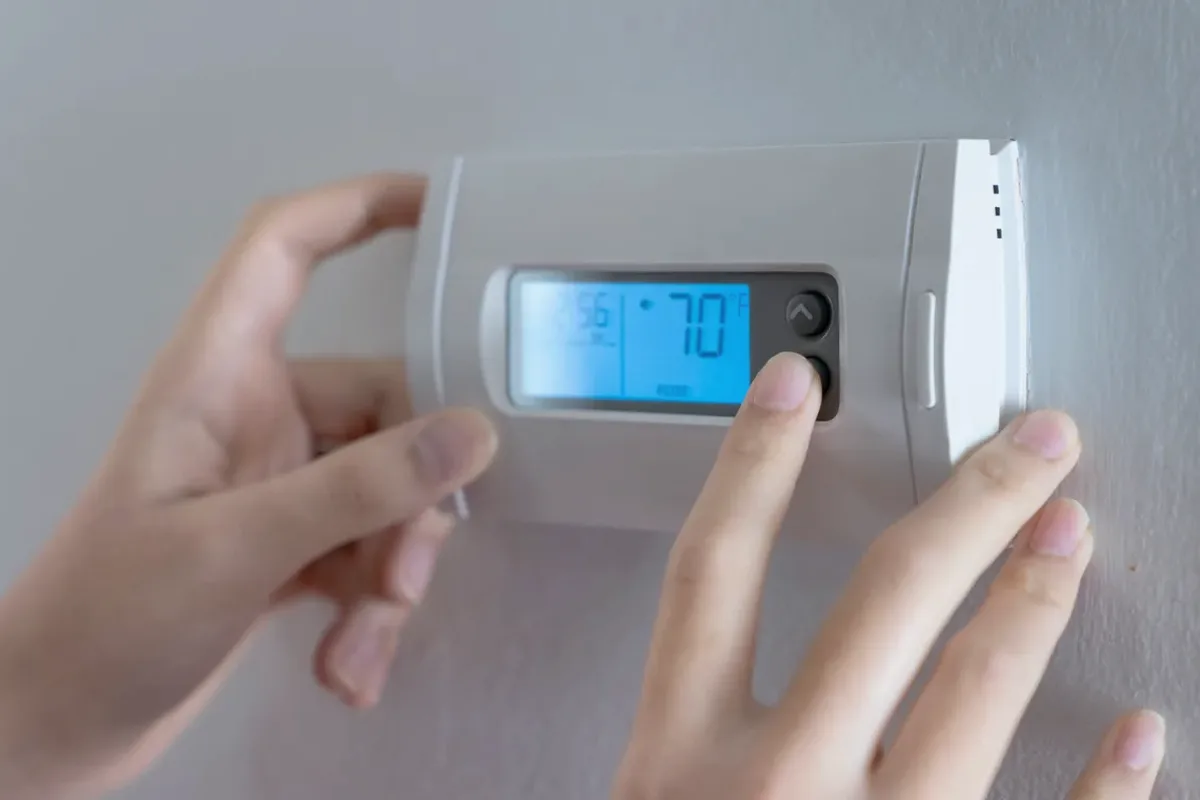
Request thermostat repair & replacement for a property in Elmira. Include the equipment, the problem or planned work, and your location so the request can be reviewed.
What equipment is connected to the thermostat, and what reading or operating behaviour seems incorrect?
A thermostat that will not turn on, displays a temperature that differs from the room, or causes irregular system cycling may have a control, sensor, or compatibility issue. The connected heating or cooling equipment, thermostat model, wiring arrangement, and symptom pattern help determine whether repair is appropriate. Replacement may be considered when the control is damaged, no longer suitable, or incompatible with equipment being changed. Smart or programmable features should be selected only after their system requirements are confirmed.
Assessment can compare the displayed temperature with a reliable room reading, review the thermostat model and settings, and observe how the connected equipment responds to a call. Short cycling may result from control setup or an HVAC fault, not necessarily a failed thermostat. Wiring and compatibility matter when replacing a control, particularly with heat pumps or multi-stage equipment. Internal wiring should be assessed by a qualified service provider.
Temperature readings, sensors, display, and cycling symptoms
Programmable and smart thermostat system compatibility
Repair versus replacement after diagnosis or equipment changes
Assessment and Scope
Questions for the Proposed Work
01
Separate a sensor or display issue from an HVAC fault
An inaccurate display, blank screen, or repeated cycling can have several causes. The thermostat's model, settings, sensor location, and response to a heating or cooling call help distinguish a control problem from an issue in the connected equipment. Comparing the displayed reading with the room conditions provides useful evidence, but does not by itself confirm a failed sensor. The diagnosis should identify whether repair belongs at the thermostat or elsewhere in the system.
02
Confirm compatibility before choosing a replacement
A replacement thermostat needs to match the connected equipment and its control requirements. Heat pumps, multi-stage systems, and equipment with auxiliary heat may require specific functions or wiring configurations, so the model and existing connections should be identified first. Programmable and smart controls can offer different scheduling or remote features, but those features are useful only if compatible with the system and the household's needs. Control wiring work is not an occupant task.
03
Use condition and system changes to decide repair or replacement
Repair may suit a thermostat with a defined, correctable problem that remains compatible with the HVAC equipment. Replacement is worth evaluating when the control is damaged, its readings remain unreliable after assessment, or new equipment requires different control functions. The comparison should include the thermostat model, control behaviour, system compatibility, and any recent equipment changes. This avoids replacing a thermostat when the cause lies elsewhere or retaining one that cannot properly control the system.
Compare the next step
Review retained programs and remote-account settings with the owner before assuming a control failed during the absence. Ask whether the installed equipment responds correctly to the intended occupied settings. Keep clear instructions for seasonal operation, battery care where applicable, and remote access ownership.
Thermostat wiring is not universal. Do not connect wires by colour alone or work on energized wiring; a compatible control must be configured for the equipment it serves.