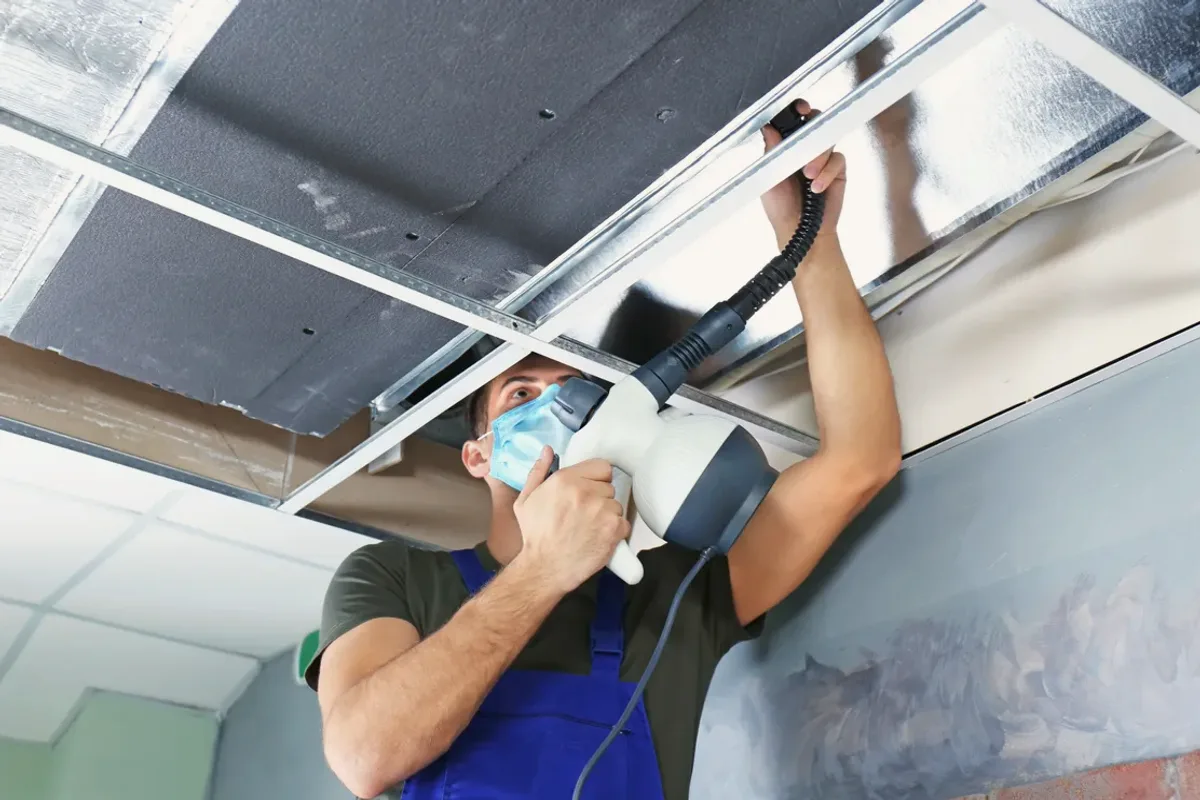
Is there a specific source of debris, visible buildup, or airflow problem prompting a duct inspection?
Duct cleaning is most useful to consider when there is a specific reason to inspect the ductwork, such as visible renovation debris, material released from a damaged section, or a documented buildup. Dust on a grille alone does not establish that the full duct system needs cleaning. Inspection findings can distinguish removable debris from a crushed duct, closed damper, or equipment-side airflow issue, each of which calls for different work. The observed condition should define the cleaning scope.
Assessment should identify whether the concern is in supply ducts, return ducts, registers, or connected equipment and whether debris is visible or otherwise documented. If one register has weak airflow, inspection may reveal a crushed section or damper issue rather than material that cleaning can resolve. Renovation dust can justify checking affected runs. Findings determine whether targeted cleaning, duct repair, or further equipment diagnosis is appropriate.
Targeted removal of documented duct debris
Airflow restriction checks for crushed ducts and dampers
Inspection scope for supply, return, registers, and connected equipment
Assessment and Scope
Questions for the Proposed Work
01
Target cleaning to a documented source of debris
Construction or renovation can leave dust and particles in nearby duct runs, making an inspection of affected sections more useful than assuming every duct needs the same treatment. The location and type of debris help define the work area and whether registers or connected components also require inspection. Cleaning should be based on observed conditions and the duct system's layout. It should not be presented as a routine service or as a guarantee of improved indoor air.
02
Investigate weak airflow before attributing it to dirt
A register with weak airflow may reflect debris, but it can also result from a closed damper, crushed duct, or equipment-side restriction. Comparing airflow across rooms and inspecting the relevant run helps distinguish these causes. A pressure measurement or camera inspection may provide useful evidence where access permits. If a duct is damaged, cleaning alone will not correct the restriction; repair or adjustment belongs in a separately defined scope.
03
Set the work around inspection findings
The duct material, access points, system arrangement, and location of any buildup affect how cleaning can be performed and which components are included. Findings should clarify whether supply and return runs, registers, or connected air handlers are part of the requested scope. Where damaged sections or obstructions are found, record them separately so cleaning is not mistaken for a repair. Manufacturer instructions and inspection findings guide any maintenance involving the connected equipment.
Compare the next step
Separate stale-room odour from evidence of contamination inside the air system. Ask for an inspection of any documented pest or water-entry concern and an explanation of the source. A cleaning scope should identify affected materials and components, with moisture correction or material replacement addressed when needed.
Routine cleaning is not automatically necessary and does not guarantee health or energy benefits. Resolve moisture sources and assess damaged materials rather than treating cleaning as the only remedy.